
What Is an Embossing Stamp and How to Emboss
An embossing stamp, or embosser, makes a raised impression without ink: two matching dies press the paper from both sides. It is used for seals and logos. Heat embossing is a different technique, where powder is melted over a stamped design. You can design your custom embossing stamps with our online stamp designer, then have them made by a professional.
What is embossing
Embossing means pressing a design into paper or another material so that it stands out in relief. Undoubtedly, most of us are unaware of the functioning of many systems even when we are aware of their basic terms. With this, it's obvious that not all of us might be acquainted with this phenomenon, as it's not something involved in our daily lifestyle.

So, before we dive into that, let's start with understanding the term "embossing".
It is the process of making raised or depressed relief patterns and images in paper and other media by using a pressed die, such as a die made after designing a stamp online. Typically, an embossed design is raised above the background, while a depressed design is sunken deeply into the page's surface but may still protrude a bit on the back of the sheet. Depending on the design, the relief can be anything from small lettering to a fine spider web. There are a variety of other uses, including lettering, decorative patterns, logos, notary and corporate seals, wedding invitations and stationery, and even fabric.
How folders and dies work
In card making, the raised design is often made with a folder. The primary components are: the paper, which can be any type of flat or glossy paper; a die-cut design, which may be a logo, text or an ornament; and a press, which includes special metal plates to hold the paper in place. These parts combine to make an easy-to-use die-cutting machine that can make high quality cards and other products. To create a smooth edge or a rounded effect, the die can be elliptical or have a curved design.
How an embossing stamp works
An embosser has two matching metal dies: one with the design raised and one with it recessed. When you press the embosser handle, the dies squeeze the paper from both sides, and the design stays on the paper as a raised impression with no ink.
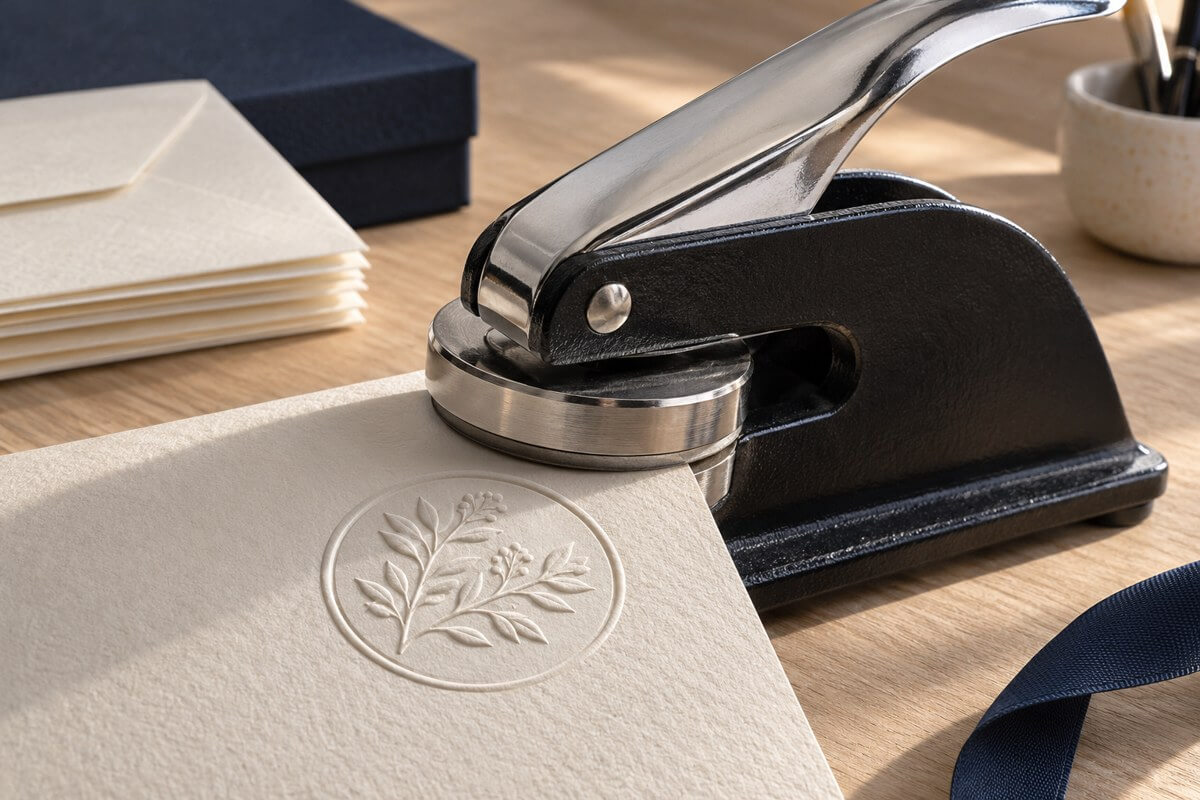
Embossing stamps differ from standard rubber stamps. A hand-held embosser has a metal lever that presses the paper down onto a solid base between the dies. Standard stamping, by contrast, works with ink that is applied with a roller or a pad to the raised design of rubber stamps. The design for both kinds of stamps can be prepared in an online stamp maker or seal designer.
Embossers come in hand-held and desk versions, and, like ink stamps, they can carry almost any custom design: round notary seals, corporate seals, a return address or a monogram.
How are embossed stamps created?
A raised impression is typically made using an embosser: the paper goes between the dies, and the pressure raises the design or pattern. The hot air tool of the heat method works differently; see below.
How are embossed die-cuts made?
After pressing, the design can also be cut out by using a die-cutting machine. The machine cuts the outline around the raised design, so the entire design is trimmed to fit the edges of the shaped paper.
Read More: Features of the use of a triangular stamp
How to emboss paper: step by step
There are two common ways to emboss at home: the dry method with an embosser, folder or stencil, and heat embossing with rubber stamps, powder and a hot air tool.
How to use an embosser
- Design your seal, logo or monogram, then have professional makers produce the embosser dies.
- Insert the paper between the dies of the embosser, with the area you want to emboss facing up.
- Squeeze the handle firmly just once.
- Release the embosser handle and remove the paper: the design stays as a crisp raised impression.
What is heat embossing?
Heat embossing is a process that makes raised designs with rubber stamps, powder and heat. The stamp is inked on a slow-drying ink pad, then the design is stamped on the paper, and the powder that sticks to the wet ink is melted using a hot air tool into a raised, glossy line. Unlike the dry method, it does not require any additional tools such as embossers or dies, and a pigment powder can add color to the design.
Materials required
How to make your own raised design? Creating these designs is actually quite easy if you understand how they work. For this, you'll need cardstock, some paper for your design, rubber stamps, embossing ink pads and powder, and a hot air gun.
How is heat embossing done?
- Press your rubber stamp onto the ink pad.
- Stamp the design on the paper.
- Cover the wet ink with the powder.
- Tap off the excess powder and return it to the jar.
- Then melt the powder with the hot air gun until it rises and turns glossy.
This melted coating prevents smearing of the final product. The process can be repeated with another powder until several different colors are produced. It is a widely popular stamping technique in card making.
Stamped embossing
Another method is stamped embossing, where an image is first stamped with ink and then raised in the same place. It is also useful when designing a stamp with a clear outline: after inking, a special kind of tool presses the stamped area and leaves a raised seal impression on the surface of the material.
Read More: How to create a rectangular stamp layout
Stencil embossing
In addition to ink stamps and embossing powders, another option is to use stencils. These come in various sizes, and they allow the artist to transfer an image directly onto a piece of material: the paper is pressed into the stencil opening with a stylus, which leaves a raised outline. Stencils have been around for years, but new advances in technology have made it possible to create high quality images with even the most modest of budgets. Whether you are trying to create a logo for your business or you are looking to make a picture on your own, you can find a great kit online.
Choosing the base and the design
Setting up your paper, ink, and powder is pretty easy, depending on your skills and experience level. The most important part is the design on the base material, which will determine how the final product looks. Since there are a variety of methods and techniques for raised designs, you can choose the method that you feel most comfortable with. For instance, you can choose to have a more elaborate design, or you can even use an outline to give a more natural look. There is also a wide range of options that allow people to have a little fun while learning how to emboss.
Read More: Customize rubber stamp easily with MyStampReady service
Embossed stamp vs ink stamp
An embossed stamp leaves a raised impression without ink, while an ink stamp leaves a flat colored print. The relief can be felt by touch and gives paper a formal, official look; ink stamps add color and are the usual choice for everyday office documents.
The two kinds of stamps are often combined. Florida law, for example, requires a notary's official seal to be a rubber stamp in photographically reproducible black ink and allows an embossed (impression-type) seal only in addition to it (Florida Statutes § 117.05(3)(a)).
Frequently asked questions
What is an embossed stamp?
An embossed stamp is a raised impression pressed into paper by an embosser, without ink. The term also means the embossing stamp itself, the tool with two matching dies.
What does embossing mean?
Embossing means raising a design above the surface of paper or another material by pressing it between a raised and a recessed die. A design pressed below it is a depressed, or sunken, design.
What does an embossed seal mean?
Embossed seals are pressed into paper as a raised impression, often with a name, logo or text around the edge. They show that the paper was marked by the owner of the embosser, such as a company or a notary.
What is an embosser?
Embossers are hand-held or desk presses with two matching dies. They work much like a stapler, which is why people sometimes call them an embossing stapler.
Conclusion
Embossing, altogether, is an attractive technique for paper crafts and official papers, which involves creating raised designs in the paper without ink or any other liquid media. In essence, this technique, done with an embosser, is called dry embossing. Heat embossing is another technique, often used for card making: it involves stamping a design on a card and melting powder over it. For better results with custom embossing stamps, it is essential to contact a professional stamp maker, as they will help refine your design so that the seal impression is crisp and clean.
You can read more in our stamp and seal blog from the MyStampReady team.
- How to get a company seal or personalized stamp for free
- Free electronic stamp maker online with saving a rubber stamp layout
- Rubber stamp maker is the best way to brand your business
- 6 reasons why you need a rubber stamp in 2022
- A step by step guide for making a custom rubber stamp in 2022
Author: Ekaterina Krasnbaeva · updated 3 Nov 2026
Date of publication 2021-07-29 15:23:00